-1-1920x1080.png&w=3840&q=75)
Kalimpong is different in kind from the three villages further up the ridge — it's a real town, with a permanent population, a working economy beyond tourism, and enough infrastructure that most groups pass through it even when it isn't the final stop. For travellers who want hill-station character without giving up mobile signal, ATMs and restaurant choice, it's a destination in its own right.
## Getting there from NJP
Kalimpong is the closest of this group to NJP — about 65 km and 2.5 hours by road, via Sevoke and along the Teesta valley before the final climb into town. This is the best-maintained stretch of road in the whole cluster, since it's also the main route onward to Lava, Rishop, Kolakham and, further afield, Sikkim. Shared jeeps run this route regularly from the NJP/Siliguri stand, in addition to the reserved-car option most group bookings use.
## When to go
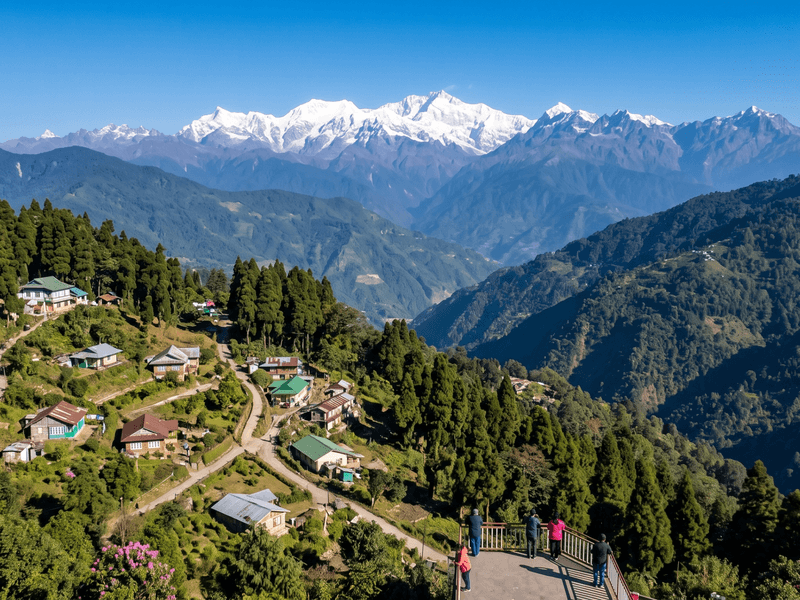
Kalimpong's lower altitude compared to Lava and Rishop means milder weather across the board — genuinely pleasant from September through June, with October to December offering the clearest views of the Teesta valley and, on good days, the distant Kanchenjunga range. March to May brings the town's orchid nurseries and gardens into bloom, reason enough on its own for some travellers. Winter (December–February) is cool rather than cold, closer to a pleasant jacket-weather chill than the frost found higher up in Rishop. Monsoon (June–September) brings heavy rain and a real chance of landslide-related road disruption on routes further into the hills, even when Kalimpong town itself is functioning normally — worth checking before committing to onward travel to Lava or beyond during peak monsoon weeks.
## What to do
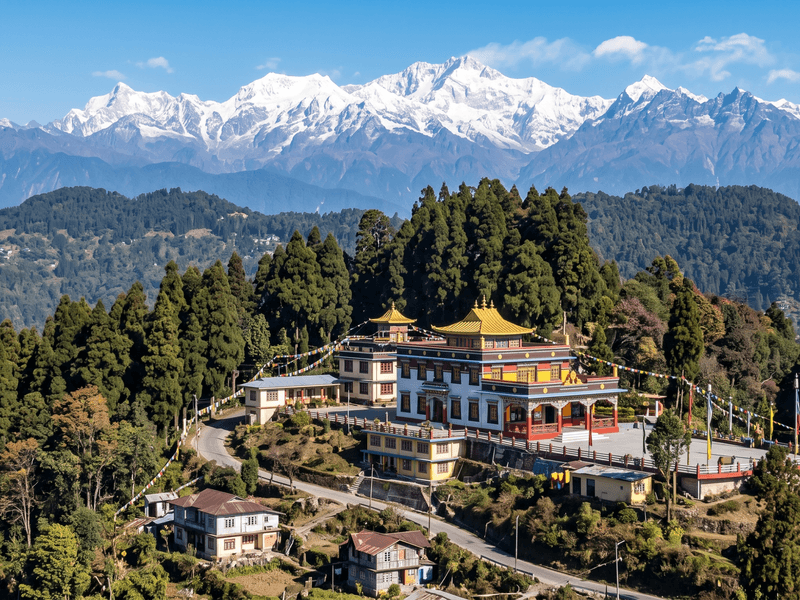
Kalimpong has more on its list than the villages above it: Zang Dhok Palri Phodang and Durpin monasteries, both active and open to visitors; Deolo Hill for a wide valley view and a quieter walk than the town centre; and a genuine flower-nursery trade — several orchid and cactus nurseries around town are open to browsing, a legacy of Kalimpong's role in the region's cut-flower export business. The town's Main Road and old market area are worth an unhurried walk for anyone interested in Kalimpong's Silk Route trading history, when it sat on the route between Tibet and the plains. It's also simply the practical stop for anything a group needs before heading further up — cash, supplies, a proper meal, a phone signal check-in.
## What's hard about it
Kalimpong's popularity means traffic and crowding, especially on Main Road during peak season weekends — this is not the quiet-hill-village experience some travellers expect from a "North Bengal homestay" search, and groups wanting that should treat Kalimpong as a stop rather than the whole trip. Homestays here skew toward small hotels and guesthouses more than the family-homestay model that defines Lava, Rishop and Kolakham; travellers specifically wanting that intimate, meals-with-the-host experience may find Kalimpong less suited to it than its neighbours.
## Where to eat on the way
This is the easy one: Kalimpong has the widest range of food options anywhere in this cluster, from momos, thukpa and other Tibetan-influenced dishes to Bengali thalis, bakeries and a handful of proper sit-down restaurants along Main Road. For any group heading further up to Lava, Rishop or Kolakham, this is the place to eat a real meal — options thin out fast past this point.